by Jillian Rathbone
This article was originally posted on The Australia Arbitration Week blog.
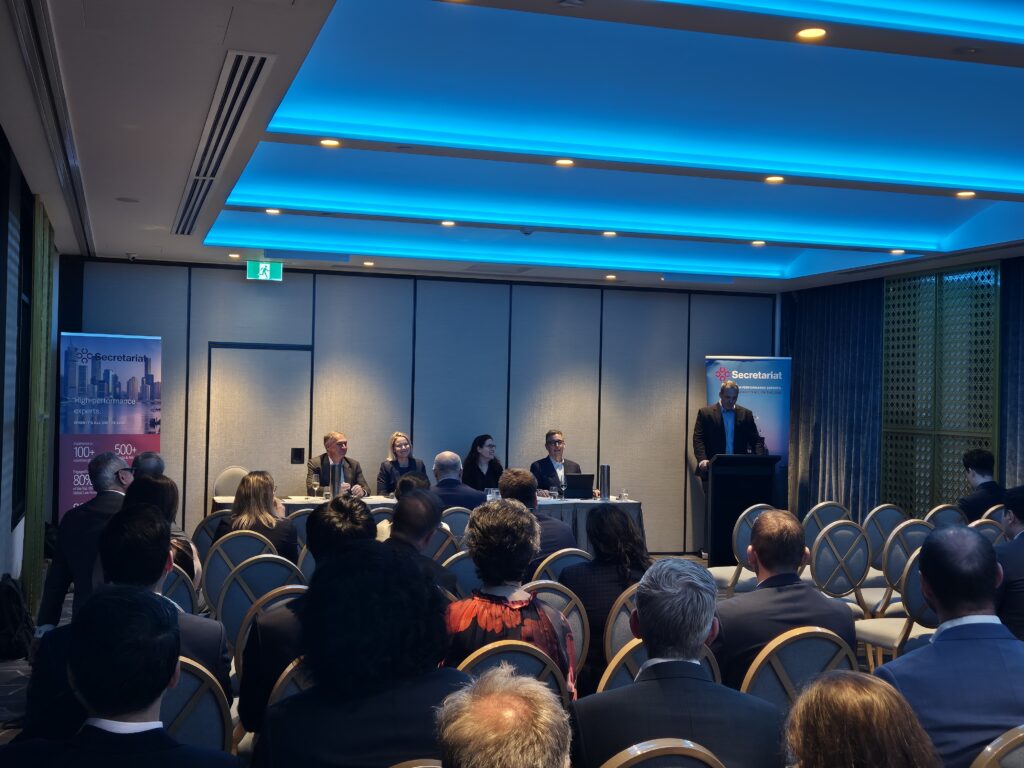
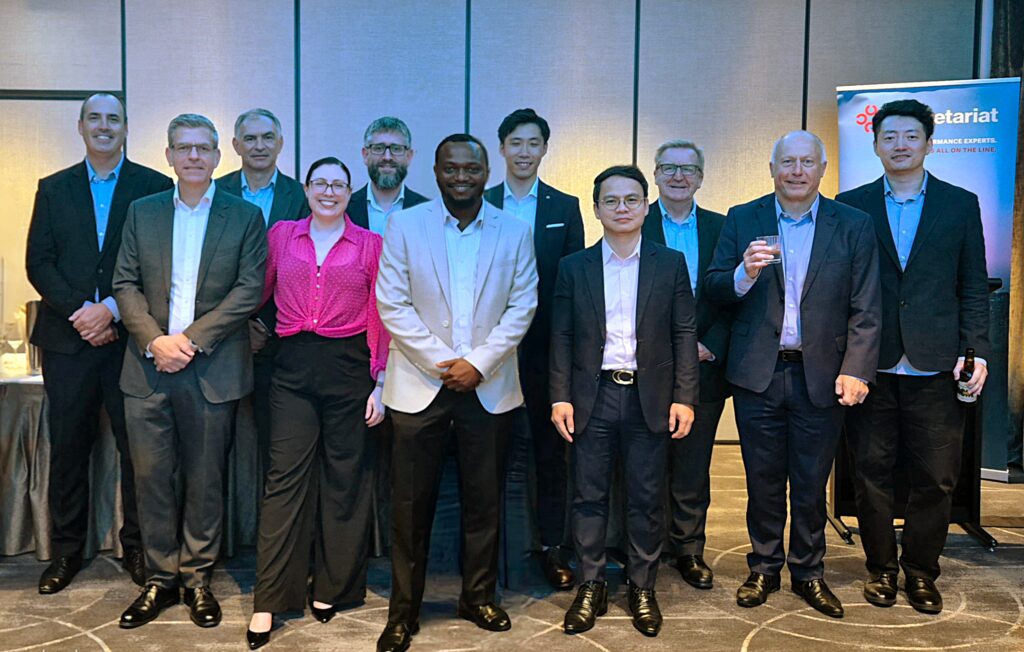
Hosted by Joel Glover of Secretariat Brisbane, the “Arbitration Across Generations” panel brought together experts from various backgrounds to explore how generational diversity is shaping arbitration practices. Panellists included John Lancaster from Secretariat Singapore, Lucy Martinez of Martinez Arbitration, Mark Dempsey SC, and Emily O’Brien from Level 27 Chambers. Together, they delved into mentorship, technology, generational dynamics, and the value of inclusion in the field of arbitration.
Here’s a look at the main takeaways from the event.
Generational Differences in Arbitration Approaches: Emails, Avoiding Phone Calls, Emojis, and Everything in Between
The event opened with a look at how generational preferences influence arbitration practices, particularly around technology, collaboration and communication. Lucy Martinez highlighted the rapid adoption of digital tools during the pandemic, and with it, the expectation to be responsive 24/7 that developed alongside. Zoom and Teams have shifted from a pandemic necessity to an arbitration staple, thanks to the digital familiarity of younger professionals.
Emily O’Brien spoke to the opportunities created by these generational differences, noting that each generation brings unique strengths to the table. The primary difference of preferred communication styles between Boomers and Gen X (telephone calls, cryptic texts “THX” or random emojis “🦁🦉 👍”), Millennials (emails) and Gen Z (definitely, absolutely, not phone calls) was discussed. Emily notes that it is crucial to have at least one “geriatric millennial” in each team, to bridge the gap between team members who understand technology and those who don’t. The conversation revealed that all approaches have their merits, and arbitration teams benefit from a blend of concise communication and detailed written correspondence.
Mark Dempsey reminded everyone that the beauty of a multi-generational team lies in this diversity of approach. When each generation plays to its strengths – whether it’s technology, strategy, or experience — you get an all-around better team. John Lancaster added that the trick is to combine these strengths: pairing younger professionals’ knack for digital tools with the tried-and-true wisdom that senior practitioners bring to the table.
Mentorship in Modern Arbitration: Combining Tradition with Innovation
Mentorship is foundational in arbitration, and while there are many more formal mentoring programs within companies and firms now, Lucy observed that the best mentorship relationships often occur more organically. Emily discussed the practical requirements, highlighting the need for both generosity of time and of spirit for both participants, as well as providing honest feedback. Modern mentorship increasingly involves technology with the advent of videoconferencing, allowing mentors and mentees to connect across borders, though John advised that face-to-face meetings still provide a unique dynamic that video calls can’t fully replicate. Mark added that mentorship is just as much about learning as it is teaching. Today, many senior arbitrators are learning from their younger counterparts, too—especially when it comes to tech.
Technology’s Role in Arbitration: From Paper Bundles to PowerPoints
Technology has changed the game in arbitration, both in case preparation and in the hearing room. John discussed how data analytics streamline evidence-gathering, enabling teams to manage data efficiently. But he warned against data overload, which can give cross-examiners ample material to dig for inconsistencies. Mark weighed in on virtual hearings, noting that while many appreciate their convenience, in-person hearings remain essential in cases where non-verbal cues and body language play a significant role in cross-examination. Lucy noted the shift from paper-based to electronic hearings, citing benefits for both practicality and the environment, though she recommended checking each arbitrator’s preferences, and more importantly, ensuring no one steps on crucial cables within the hearing room!
Client Perceptions and the Value of Diverse Expertise
Client expectations are evolving, though younger experts may still encounter credibility challenges due to their age. John suggested that younger professionals could build credibility by focusing on niche areas and gaining hands-on experience. Mark noted that sectors like construction are becoming more receptive to younger experts, who bring fresh perspectives (and fewer grey hairs.) Emily added experienced clients can make for more collaborative case strategies —just watch out for any emoji misunderstandings in the emails.
Diversity and Inclusion in Arbitration: Progress and Room for Growth
A push for diversity is slowly reshaping arbitration panels and influencing inclusion initiatives. Both Mark and Lucy acknowledged the strides made in gender representation but noted that ethnic and regional diversity still need improvement, especially appointments for arbitrators from Asia, Africa. Emily echoed the sentiment, saying diversity brings fresh perspectives that enhance decisions in arbitration. The panel agreed that mentorship programs are key to fostering inclusion and opening doors for underrepresented voices in arbitration.
Challenges and the Future of Arbitration
The panel closed with a look to the future of arbitration. Mark emphasised that while Big Data and AI can be powerful, we need to avoid drowning in information overload. “It’s more important than ever,” he said, “to step back, think deeply, and focus on the fundamental issues.” As Lucy noted at the beginning of the discussion “AI won’t take your job, but someone using AI might.” John and Emily addressed the role of predictive analytics and AI, with John cautioning that while using technology streamlines case preparation, over-reliance on it may limit younger experts’ skill development. For now, he remains cautious about AI’s potential in predictive analytics, finding it less suited for the nuanced, variable nature of arbitration cases. “It’s going to be a push-and-pull scenario for a while,” he concluded, as technology advances, but human judgment remains as the necessary handbrake.
Practical Advice for Newcomers
In closing, the panel offered practical advice for those stepping into the field. Mark highlighted the importance of observing and learning from experienced colleagues, as well as following the expert’s code to maintain independence and honesty. He encouraged new experts to stay courteous but firm, remember the importance of communication, and to develop the craft of clear, unbiased explanations — especially when under cross-examination. Lucy emphasised the need for clarity, especially when addressing international audiences who may face language, common law or cultural differences.
Emily, newer to the field herself, gave relatable advice: “Prepare, prepare, and then prepare some more.” Over-preparation, she said, builds confidence, allowing new practitioners to approach cases with a level of expertise that makes them feel ready to handle surprises. For John, preparation is also a means of self-preservation. “Every case” he joked, “could be the one that ends my career,” but so far, staying thorough has helped him avoid that fate.
Conclusion
The “Arbitration Across Generations” panel emphasised that while arbitration is evolving, the fundamentals remain: collaboration, mentorship, technological advances and a dash of humour (and maybe an emoji or two). And if this conversation was any indicator, the future of arbitration is in good hands — old, young, and everyone in between.
The UK’s Economic Crime and Corporate Transparency Act (ECCTA) represents a significant regulatory shift, holding businesses accountable for preventing fraud across their operations, including their third-party networks.
With no statutory defence for a “failure to prevent fraud,” organisations are now required to demonstrate comprehensive fraud prevention measures. Senior management is under increased scrutiny, tasked with proactively managing fraud risks, and facing the potential for prosecution. The repercussions are serious, ranging from unlimited fines and reputational damage to heightened regulatory oversight. Strengthening fraud risk management frameworks is now imperative to meet these enhanced regulatory obligations.
In this series of articles for Governance & Compliance magazine, Secretariat Managing Director Hitesh Patel and Director Ben Boorer explore the extensive reach and practical implications of the ECCTA, providing insights into how businesses can effectively navigate the challenges imposed by the Act.
Read the full articles (subscription may be required):
Failure to prevent fraud – what you don’t know could hurt you
How ECCTA changes the game for fraud risk management
Managing Director Matt Farber provided trial testimony on behalf of SVV in patent litigation involving the infringement of patents covering optics and LED lighting technologies.
Secretariat was retained by Katz PLLC on behalf of SVV Technology Innovations Inc. in patent litigation alleging monitors sold by Taiwanese technology firm ASUSTek Computer Inc. infringed SVV patents covering optical film. Dr. Farber and Katz PLLC worked with Caldwell Cassady & Curry in the trial phase of the matter.
The September 26 verdict was reached after a four-day trial in the U.S. District Court for the Western District of Texas in Waco. The jury found that ASUSTek’s infringement of all claims of the four SVV patents was willful, and that ASUSTeK owed SVV $22,400,000 in damages, an amount based on Dr. Farber’s opinions.
Dr. Farber submitted an extensive report and testified at trial to his analysis and opinions regarding a reasonable royalty. Dr. Farber’s work was supported by Matt Fitzgerald, Alex Gisquet, and Jack Schwartz.
The patents involved are U.S. Patent Nos. 8,290,318, 9,880,342, 10,439,089, and 10,627,562. The case is SVV Technology Innovations Inc. v. ASUSTek Computer Inc., No. 6:22-cv-00311.
Law360 and Bloomberg Law (subscriptions may be required) coverage may be found here and here.
Related: “Jury Awards $10.3 Million in Acer Patent Suit”
Secretariat, the global disputes, investigations, economics, and expert witness advisory firm, welcomes Managing Directors Ian Greenhough and Ralph Stobwasser as senior-level leaders to the firm’s Dubai office. Greenhough and Stobwasser join at a time of tremendous growth for Secretariat globally and in the Middle East and North Africa (MENA) region, adding expertise to the firm’s Construction Quantum and Investigations & Regulatory Advisory practices respectively.
Ian Greenhough brings more than 23 years of experience in the construction industry with 17 years based in the Middle East. He is a seasoned testifier and has been appointed on multiple occasions as a quantum expert witness on projects in the Middle East and Europe with disputes in excess of US$250m. His experience includes major infrastructure works, renewable energy, power and technology/IT projects. Lexology Index (formerly Who’s Who Legal) recognizes Greenhough in “Thought Leaders – Arbitration,” noting he: “performs strongly under cross-examination,” is “great to deal with and I’d highly recommend him,” and highlights his “common-sense approach.” Greenhough earned a Graduate Diploma in Law (GDL) from Lancashire Law School and a Bachelor of Science from the University of Newcastle upon Tyne.
“I am delighted to join Secretariat and to be part of an award-winning global construction disputes team,” says Greenhough. “I look forward to contributing to the team’s success and advancing our impressive growth story in the region.”
Ralph Stobwasser has more than 20 years of experience leading large and highly complex investigations, remediation, asset tracing, and due diligence assignments. His sector expertise and client coverage spans government and public sectors, financial services, sovereign wealth funds, and public and private corporations in the Gulf Cooperation Council (GCC) and wider Middle East. He has developed a reputation as a trusted advisor to a broad client base in the legal community in the Middle East, Europe, and United States where he is regularly engaged to provide litigation support and strategic advice in special situations. Stobwasser earned a Master’s Degree in Middle Eastern Studies from Freie Universität Berlin and an Undergraduate Degree from Universität Freiburg.
“The team Secretariat is assembling, globally and in the MENA region, represents some of the most respected and trusted leaders who handle high-stakes investigations and regulatory matters,” says Stobwasser. “The opportunity to join this impressive team and build the Secretariat brand marks an exciting chapter in my career.”
Welcoming both leaders to the firm, Managing Director Don Harvey notes, “Ian and Ralph embody the special kind of talent we look to add to our roster – passionate problem solvers who have earned the distinction of being trusted advisors by delivering the highest-quality work. I am excited to call both of them colleagues.”
Secretariat is pleased to announce the opening of our Montréal office. This new location expands our construction disputes and advisory capabilities with the addition of two key Directors — Etienne Berge and Georges Bader. The opening of Secretariat’s Montreal office illustrates our impressive growth in Canada and our ability to serve clients needs across all major markets.
Secretariat’s Antitrust team plays a vital role in supporting expert witness Dr. Kinshuk Jerath’s testimony on behalf of the successful U.S. Plaintiffs in this landmark decision.
In this week’s landmark United States v. Google decision, Secretariat’s Antitrust team, led by Managing Director Dr. Keith Waehrer, supported the analysis and work of expert witness Dr. Kinshuk Jerath, on behalf of the successful U.S. plaintiffs.
Dr. Jerath’s analysis and testimony centered on topics related to advertising markets and Google’s anticompetitive behavior and dominance in the text advertising market in particular. Judge Amit Mehta’s decision made particular note of Dr. Jerath’s testimony, citing that “The marketing funnel is neither ‘dead’ nor had it become ‘obsolete’ because of the emergence of digital marketing and new ad technologies,” and industry professionals “… continue to use the funnel to shape marketing strategies, even on digital platforms.”
Dr. Jerath is the Arthur F. Burns Professor of Free & Competitive Enterprise & Advisor in Digital Marketing at the Columbia Business School, Media and Technology Program. Secretariat’s team included John Gale, Trevor Larner, Josh Higham, and Ty Ehuan.
Richard Brady, Aminta Raffalovich, Steven Schwartz, and Jennifer Vanderhart authored a chapter in The Guide to Damages in International Arbitration – Sixth Edition. The guide is designed to assist the global arbitration community in understanding damages issues. The chapter is titled “The Use of Econometric and Statistical Analysis in Damages.”
The full guide is available online here.
Managing Directors Stuart Dekker, Joe Skilton, and Eddie Tobis authored the chapter “Compensation for Expropriation” in the 9th Edition of The Investment Treaty Arbitration Review.
Managing Director Matt Farber provided trial testimony on behalf of SVV in patent litigation involving the infringement of patents covering optical film.
Secretariat was retained by Katz PLLC on behalf of SVV in patent litigation alleging monitors sold by various companies, including Acer, infringed patents covering an optical film. Dr. Farber and Katz PLLC worked with Caldwell Cassady & Curry in the trial phase of the matter. At the conclusion of the trial, the Western District of Texas jury found the asserted patent claims to be valid and infringed, and that Acer owed SVV $10,306,900 in damages, an amount based on Dr. Farber’s opinions.
Dr. Farber submitted an extensive report in October and testified at trial to his analysis and opinions regarding a reasonable royalty. Dr. Farber’s work was supported by Matt Fitzgerald, Alex Gisquet, and Jack Schwartz.
The patents involved are U.S. Patent Nos. 10,838,135; 8,740,397; 10,797,191; and 10,868,205. The case is SVV Technology Innovations Inc. v. Acer Inc., case number 6:22-cv-00640, in the U.S. District Court for the Western District of Texas.
Law360 and Bloomberg Law (subscriptions may be required) coverage may be found here and here.
Related: “SVV Technologies Awarded $22.4 Million in Another Patent Infringement Verdict”
Nine Secretariat intellectual property experts have been recognized as leading patent litigation expert witnesses in the eleventh edition of the IAM Patent 1000.
- Bruce Blacker, appearing for the second consecutive year, is a “seasoned testifier in both US and international arenas.” The publication further notes that he is a “smart choice” referencing his “recent work including assessing reasonable royalty damages for Orange Electric Co Ltd [link] in a patent infringement case for which his exact testifying amount was awarded.”
- Richard Brady is an “economic analysis guru” noted for “providing critical testimony in high-pressure litigation, particularly regarding healthcare-related intellectual property.” He is included for the fifth time.
- Carrie Distler is recognized by the publication, which notes that she has “a deep understanding of the case law” and approaches her assignments with “enthusiasm and commitment.”
- Richard Manning appears for the second consecutive year. He is acknowledged as someone “whose experience as an economist for biopharmaceutical companies proves vital to assessing the real-world challenges to and value of his clients’ intellectual property.”
- Nisha Mody, recognized for the third year in a row, is renowned for her “prowess in economic analysis testimony.” IAM noted that her expertise “has led her to be retained in almost 100 matters.”
- Aminta Raffalovich is recognized for her expertise in “technology and innovations economics” and her work on a multi-billion-dollar patent litigation case. IAM also commented that Ms. Raffalovich “can be called on for injunctive relief analysis.”
- Steve Schwartz, who received the recognition for the fourth time, “has notched up three decades in the field, making him a smart choice for a range of economic analysis, including lost profits, commercial success and reasonable royalties.”
- Ryan Sullivan is recognized for the eleventh straight year. The listing highlighted that he “is a go-to in high-stakes litigation, offering market analysis and economic benefit evaluations, as well as assessing damages. Recent work of his includes a case for VLSI Technology in which his testimony was the basis for an award of $2.175 billion.”
- Jennifer Vanderhart made her debut on the list this year. The publication included a testimonial that she “is exceptional. She becomes intimately familiar with the financial details in every case she takes on. She is an excellent communicator and she is efficient.”
In its firm profile, IAM notes: “Living up to its name, Intensity [now known as Secretariat] comes highly recommended for the deep engagement and tailored expertise it brings to every case, with its professionals working together to provide creative and accurate solutions and testimony for their clientele.”
The IAM Patent 1000 is regarded as the definitive “go-to” resource identifying the world’s leading expert witnesses and professionals with world-class, private practice patent expertise. IAM’s extensive research process includes more than 1,800 interviews with industry specialists around the world. Only those identified by market sources for their exceptional skillsets and profound insights into patent matters feature in the IAM Patent 1000.
IAM’s full research and rankings can be found here.
Jéssica Dutra and Pablo Varas were contributors to the recently published “2023 Annual Review of Antitrust Law Developments” from ABA Antitrust Law Section. For over 40 years, the publication and its annual supplements have been recognized as the most authoritative and comprehensive research tools for antitrust practitioners. The 2023 Edition summarizes developments during 2023 in the courts, at the agencies, and in Congress.
By Mona Birjandi and Matt Farber
This article first appeared on Law360 on May 14, 2023.
On March 26, the container ship Dali lost power and crashed into a support pylon, causing the Francis Scott Key Bridge in Baltimore to collapse into the Patapsco River and resulting in the deaths of six people.
Consequently, the city of Baltimore is preparing for litigation related to the bridge collapse, which is expected to include claims for economic and environmental damages.[1]
Quantifying damages in civil cases such as this one — and cases in intellectual property, breach of contract, private antitrust, class certification and class actions, personal injury, and product liability matters — is a complex task.
This article introduces the concept of an economic clerkship program as a solution to integrate early-career economists into the judiciary system. It explores how these economic clerks, working alongside legal professionals, can provide essential economic support to enhance judicial decision making.
As courts handle detailed economic analyses, the proposed economic clerkship program could not only advance economists’ careers, but also improve the understanding and accuracy of legal outcomes, similar to the way legal clerkships do.
Quantification of Damages
Civil filings that involve the quantification of damages comprise a large number of matters brought before U.S. judges. As mentioned, these matters include IP infringement, breach of contract, private antitrust, class actions, personal injury matters and product liability matters, among others.
Complex Economic and Statistical Techniques
Complex statistical and economic methods are used to quantify damages in these types of matters. Examples of such analyses used currently include choice-based conjoint surveys, event study analyses and hedonic regressions.[2] Future analyses may include the use of machine learning and artificial intelligence, or the design of A/B experiments to determine a proper damages figure.[3]
Complex Data
Today’s legal cases that involve damages rely heavily on vast amounts of complex data. This data sometimes arrives in unstructured formats — e.g., texts — and is generated in unprecedented volumes.
Processing this type of data requires advanced analytical skills to derive meaningful and reliable insights. The same dataset can yield contrasting outcomes based on how it is analyzed by different parties conducting economic analyses.
A Potential Solution
Tasked with making impactful decisions regarding motions and case outcomes in matters involving damages analyses, courts may benefit from economic clerks who help them to understand the analyses and data in depth and make fully informed decisions.
We propose an economic clerkship system in which early-career economists, or other staff supporting economic or damages experts opining on damages, spend a period of time as a clerk in U.S. district courts and other courts that see a high share of damages-related matters.
The Proven Value of Law Clerks
Law clerks have been a vital part of the judiciary for more than a century. Presently, early-career lawyers, often immediately out of law school, compete for clerkships at a variety of federal and state courts.[4] The benefits of law clerkships include, but are not limited to, the following.
Judicial Support
The benefits to judges and the court largely revolve around having talented and enthusiastic labor to help perform myriad duties. During these clerkships, these young lawyers conduct legal research, prepare bench memos, draft and proofread orders and opinions, verify citations, communicate with counsel, and assist the judge during courtroom proceedings.[5]
Legal Exposure and Networking
The benefits to the law clerks are also numerous. They see a wide variety of legal cases behind the scenes with differing legal and procedural issues; improve their research and writing; are exposed to a variety of legal skills, strategies and techniques; and build their attorney network.[6]
In the next section, we discuss how there would be similar benefits to both sides in an economic clerkship program.
How Courts Would Benefit From Economic Clerks
Courts might need economic clerks for several reasons.
Specialized Knowledge
Having an economic clerk on staff would provide deeper insight and specialized knowledge for important rulings that are highly impactful on both the case and experts’ careers, such as Daubert motion rulings, summary judgment rulings and motion in limine rulings. These motions, written by attorneys representing the parties, may take a partial view of the analyses, and to rule properly, the judge must develop an independent understanding of the analyses performed on both sides.
Data Interpretation
As noted, today’s legal cases increasingly rely on vast amounts of complex data. Different parties may interpret the same data differently, potentially leading to contrasting outcomes.
Economic clerks can play a crucial role in this context by leveraging their expertise to interpret and analyze such data effectively, making complex economic concepts more accessible to judges, juries and legal teams.
Cross-Disciplinary Collaboration
Economic clerks could facilitate collaboration between legal and economic experts. Working together, the economic clerk and the law clerks could determine the analyses performed, the assumptions and inputs that go into those analyses, and how they interact with the relevant legal precedents. The judge would also have an additional resource available during hearings on such motions to better comprehend the arguments being made on both sides. An economic clerk would be able to digest the analyses performed by both the parties’ damages experts, and delineate the inputs and assumptions that differ, along with the impact of those differences. Such an analysis could be helpful for the court to understand whether settlement is a possibility, and the barriers to settlement that might exist as they relate to the parties’ damages analyses.
Decision Support
Lastly, these benefits would extend directly to bench trials, in which the judge is tasked with determining the proper damages amount should liability be found.
An economic clerk could be an additional resource for the judge and law clerks to determine which aspects of the parties’ damages analyses are appropriate and best fit the facts of the case as part of a damages determination.
The economic clerk could highlight issues with either analysis, and explain how such issues may affect damages figures. These insights could inform judicial decisions, especially in cases where economic factors play a significant role.
How Economists Would Benefit From Clerkships
An economic clerkship can be an invaluable experience that provides great training and opportunity for growth for all economists involved in litigation, regardless of practice area. Some of the benefits to economists include, but are not limited to, the following.
Analytical Exposure and Learning
Much like early-career lawyers, an economic clerkship would likely be a boon to an early-career economist’s future prospects. They would see a variety of analyses presented under a variety of damages-related matters in IP cases, personal injury cases, product liability cases and others.
For each of those, they would get a behind-the-scenes look at how the court reviews such analyses, including the various components, such as reports, different attachments and exhibits, depositions, and motions.
Economic clerks would work hand-in-hand with law clerks, developing an understanding of how legal precedent and the various economic analyses interact to produce certain outcomes. This would improve their own exposition and analyses in the future.
Networking
Economic clerks would be exposed to attorneys and damages experts, join a clerkship family of past and future clerks, and develop networks that could prove to be beneficial in the future as they develop their own expert careers.
Public Service
Clerking is a public service. Spending a year serving the public could start a service-oriented career for economists.
Conclusion
While not all U.S. courts may require the use of a full-time economic clerk or two, as discussed above, there would certainly be numerous benefits for the courts that see the highest flow of matters that involve the computation of damages.
These benefits would improve outcomes, allowing judges to make more informed rulings on motions and within bench trials. Because of the benefits for the economic clerks early in their careers, economists would likely compete for such positions much like young lawyers do now.
Thus, such an arrangement would benefit both parties, as well as the legal system at large.
Mona Birjandi is a Senior Economist at Data for Decisions LLC.
Matt Farber is a Managing Director at Secretariat Advisors LLC.
The opinions expressed are those of the author(s) and do not necessarily reflect the views of their employer, its clients, or Portfolio Media Inc., or any of its or their respective affiliates. This article is for general information purposes and is not intended to be and should not be taken as legal advice.
[2] https://www.law360.com/articles/1593785/how-willingness-to-pay-informs-damages-methodology; https://willamette.com/insights_journal/18/special_2018_7.pdf; https://www.law360.com/articles/1379763.
[4] https://law.utexas.edu/judicial-clerkships/types/.
[5] https://oscar.uscourts.gov/duties_of_federal_law_clerks.