Welcome to Secretariat’s latest edition of Rebuilding Ukraine, where we explore the evolving landscape of Ukraine’s reconstruction, the challenges ahead and, emerging opportunities. Stay informed with our insights on Ukraine’s Emerging Risks, Funding and International Support, and Sanctions and Export Controls.
In this edition, we cover the latest 4th Rapid Damage and Needs Assessment (published 25th February 2025) commissioned by the Government of Ukraine, World Bank Group, the European Commission (EC), and the United Nations. We also discuss major funding announcements from the United States (US) and European Union, as well as recent sanctions and export control measures, including the EU’s 16th sanctions package and the United Kingdom’s (UK) largest sanctions package to date, which includes 107 new sanctions.
Emerging Risks
Businesses and investors/funders in Ukraine will encounter many challenges common to conflict zones, such as corruption, regulatory uncertainties, and infrastructure deficiencies. These factors, combined with the ever-evolving sanctions and international relations, contribute to a complex risk profile for Governments, NGOs and businesses operating in or considering investment into Ukraine. We explore the multifaceted nature of these business risks, providing insights into the challenges in this volatile region.
Recent actions by investigative units within multilateral and donor organizations highlight a growing need for scrutinizing allocated funds and addressing gaps and vulnerabilities in the current capital flow process (see emerging risks under procurement).
Feb 2025: The European Anti-Fraud Office (OLAF) has recommended recovering over EURO 91 million from a project managed by Poland’s Government Agency for Strategic Reserves (RARS) due to procurement rule breaches. An additional EURO 22 million was safeguarded from being unduly spent. The investigation, completed in June 2024, revealed overpricing and lack of competition. OLAF cooperated with the Central Anti-Corruption Bureau and the Polish Public Prosecutor’s Office, leading to three arrests. Read the full article:OLAF completes investigation into suspected serious irregularities in EU-funded procurement of power generators for Ukraine
The funding and investment into Ukraine aims to not only alleviate the immediate impacts of the conflict, but also to pave the way for long-term stability and growth. By examining the various avenues of funding and international support, we provide an overview of the international collaborative efforts to rebuild and strengthen Ukraine’s economy and infrastructure.
Reconstruction Funding Needs
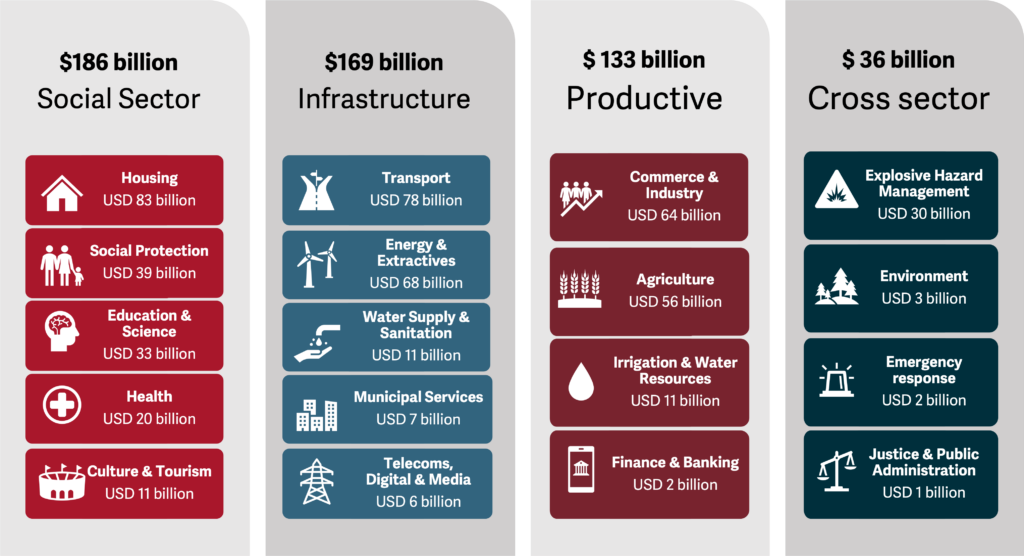
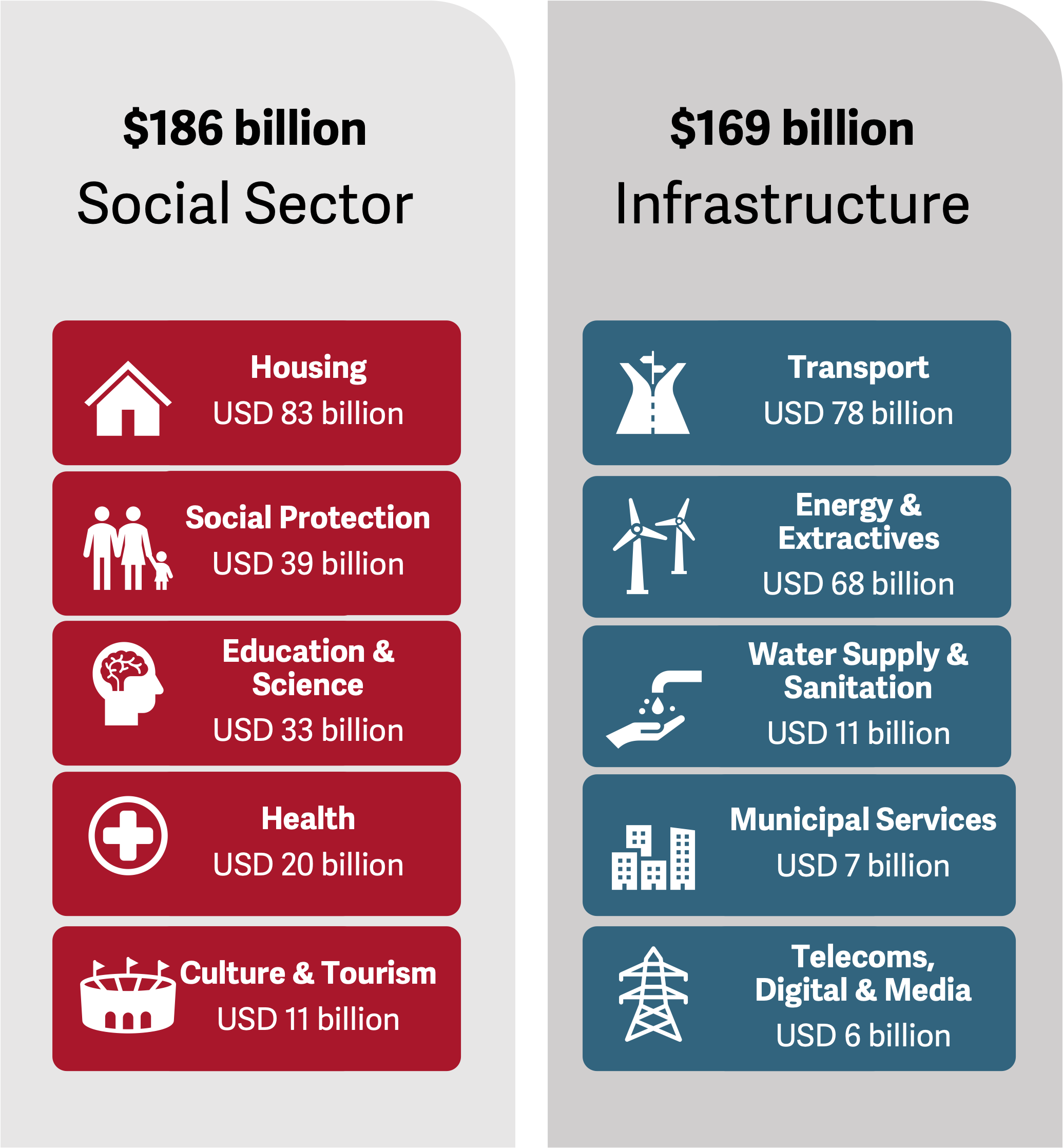
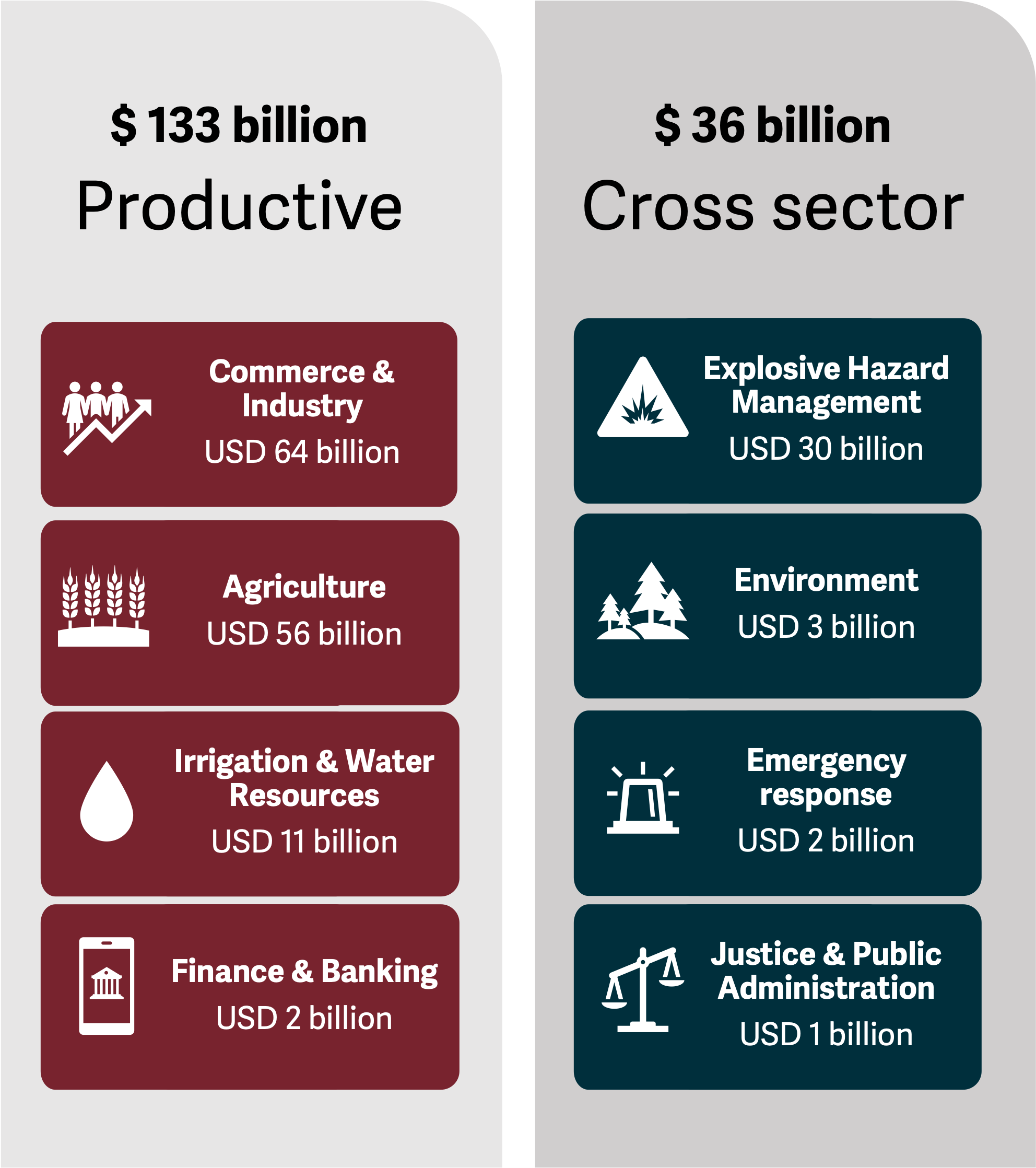
The cost of Ukraine’s reconstruction and recovery is now estimated at USD 524 billion (up from USD 486 billion), an increase of 8%, according to the Fourth Rapid Damage and Needs Assessment (RDNA4) published in February 2025. The Strategic Investment Council (SIC) in Ukraine, with the support of donor funds, has allocated USD 7.37 billion towards redevelopment of the above identified. Despite these efforts, a significant financing gap remains, highlighting the need for continued and increasing international support. Ukraine’s sector wise summary of needs is represented in the chart below:
Ukraine Critical Sector Funding Needs
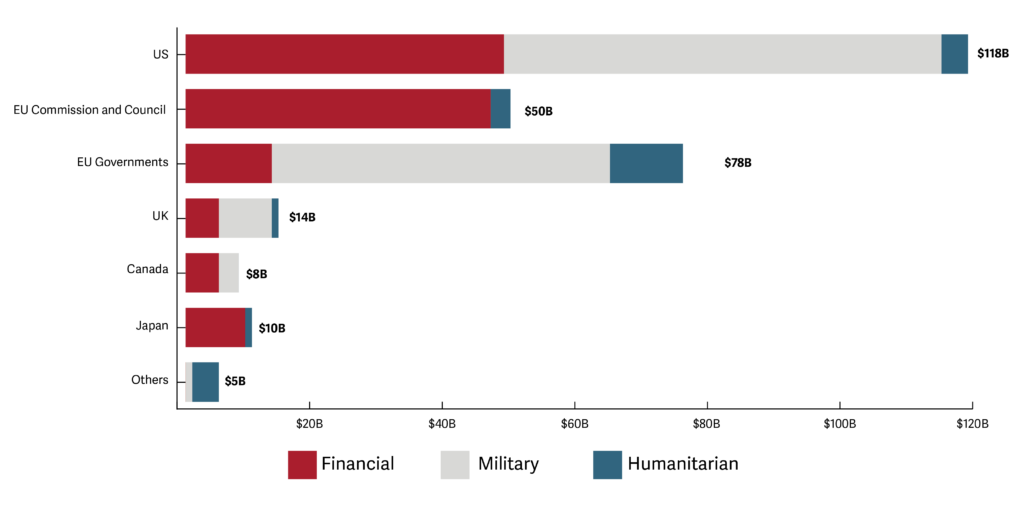
International Aid & Support
USD 283 billion of international aid has been invested into Ukraine as of 31 December 2024 (USD 239 as of 31 October 2024)
The United States and Ukraine have discussed a bilateral minerals agreement which would establish a joint reconstruction investment fund, with Ukraine contributing 50% of the revenues from the future monetization of all government-owned natural resources. The agreement would help with redevelopment efforts while also providing Ukraine with access to U.S. military support. Read Full Article.
Members of Trump’s administration have indicated a reluctance to continue funding Ukraine’s war expenses, highlighted by the suspension of USAID funding. Read Full Article.
EU countries are looking to finalize a EUR 6 billion military package to support Ukraine’s war efforts in light of US suspending funding activities. Read Full Article.
In February 2025, the European Investment Bank (EIB), the EU’s lending arm, signed an agreement to mobilize USD 1.03 billion (EUR 1 billion) in investments, of which USD 433 million (EUR 420 million) is for restoring the public sector and USD 515 million (EUR 500 million) is towards financing small and medium sized enterprises (SME) throughout the country. This latest investment of USD 51 billion (EUR 50 billion) is from the EU’s Ukraine Facility loan and grant program. Read Full Article.
The targeted sanctions and export control regimes are aimed at constraining Russia’s ability to sustain its military operations. These measures have evolved to include a wide range of individuals, entities, and sectors critical to Russia’s economy and the war effort. Key targets include major financial institutions, energy companies, defense contractors, and high-profile political figures.
Additionally, export controls have been tightened to restrict the flow of advanced technologies and goods that could bolster Russia’s military capabilities. These restrictions have also extended to other nations and governments that continue to provide military support by allowing their territories to be used in support of the conflict, continue to engage in foreign trade with Russia, as well as diplomatic backing to economic and military cooperation.
Sanctions and export controls have added additional layers of complexity for companies and their supply chains navigating an ever-changing landscape for businesses relying on Ukrainian supply chains or who are engaged in exporting goods to and from the country. The EU has agreed to its 16th round of sanctions against Russia, which includes a ban on Russian aluminum, finance and banking, trade broadcasting, and transport. This latest EU package will add 48 individuals and 35 entities to its sanctions list, including asset freezes and travel bans. Meanwhile, the UK has also announced its largest sanctions package yet, aimed at weakening the Russian military.
Tracking Recent Sanctions and Export Control Activity
Hover over a country for recent sanctions and export control activity
Recent Sanctions Themes for February 2025
Trade with Third Country Enablers The EU and UK have added 53 and 22 entities respectively, trading with Russia and supporting Russia’s military and industrial complex, thus, subjecting them to tighter export restrictions. These entities are located in Russia and other countries, including China, India, and Turkey. The list of restricted items has also been expanded to include goods and technology for Russia’s military systems, and further restrictions have been placed on exports to Russia contributing to Russian industrial capabilities.
North Korea North Korean Defense Minister No Kwang Chol, along with other senior officials, has deployed over 11,000 DPRK forces to Russia. As a result, these senior North Korean officials have been targeted by both EU and UK sanctions.
Finance and Banking The EU has imposed a transaction ban on credit and financial institutions outside Russia using the Central Bank of Russia’s SPFS system. Additionally, the prohibition on specialized financial messaging services has been extended further to 13 regional banks crucial to Russia’s financial system.
Broadcasting Ban The EU has suspended the broadcasting licenses of 8 Russian media outlets under the control of the Russian leadership, prohibiting them from broadcasting their content to the EU.
Transport, Ports and Locks The EU is prohibiting transactions with certain Russian ports, locks, and airports which are involved in the transfer of Unmanned Aerial Vehicles (UAV), missiles, and related technology, or where they are circumventing the Oil Price Cap. The EU has also widened the flight ban to include listed air carriers operating domestic flights within Russia and exporting aviation goods to Russian entities. Additionally, the prohibition on road transport of goods by EU operators with significant Russian ownership has been increased.
Energy The EU has imposed further restrictions on exports of goods and technology related to oil and gas exploration and banned the provision of temporary storage for Russian crude oil and petroleum products within the EU.
Tanner Weil provided an expert report and testimony on behalf of Air Liquide, a multinational supplier of industrial gases and related services, in a construction dispute arbitration surrounding the development and construction of an anaerobic digester biogas facility in Pennsylvania. The unanimous arbitration panel awarded more than $25.4 million, an amount determined directly from Mr. Weil’s analysis and testimony.
With deep expertise in survey research, sampling, and statistical analysis, Dr. Iyengar expands Secretariat’s capabilities in high-stakes intellectual property, class action, and commercial disputes.
During Peru’s 2026 presidential election, Secretariat’s Arnold Y. Castillo was retained by a major political party to conduct an independent assessment of identified anomalies and determine whether the available evidence justified further technical scrutiny.