Welcome to Secretariat’s April 2025 edition of Rebuilding Ukraine, where we explore the evolving landscape of Ukraine’s reconstruction, the challenges ahead, and the opportunities emerging. Stay informed with our insights on Ukraine’s Emerging Risks, Funding and International Support, and Sanctions & Export Controls.
Emerging Risks: The National Agency on Corruption Prevention (NACP), the National Corruption Bureau of Ukraine (NABU), and the Specialized Anti-Corruption Prosecutors office (SAPO) continue their focus on eliminating corruption, bribery and money laundering.
Funding & International Funding: The US and Ukraine have signed an agreement to establish the United States-Ukraine Reconstruction Investment Fund. Meanwhile, the European Bank for Reconstruction and Development (EBRD) and the UK government have also extended critical funding to Ukraine to support Ukrainian military, businesses and households.
Sanctions & Export Controls: The proposed US Sanctioning Russia Act of 2025, which was introduced to the Senate on 1 April 2025, aims to impose extensive, new sanctions on Russia and countries purchasing Russian energy and other critical exports including a 500% tariff on imports from nations buying Russian oil, natural gas, petroleum products, or uranium. In addition, the UK has also introduced new trade sanctions effective from 24 April 2025, prohibiting the export of certain items to Russia and restricting technology and software transfers related to various sectors, with import bans on synthetic diamonds and helium.
Emerging Risks
Businesses and investors/funders in Ukraine will face many challenges common to conflict zones, such as corruption, regulatory uncertainties, and prolonged infrastructure and institutional deficiencies. These factors, along with the constantly evolving sanctions and international relations, contribute to a complex risk profile for governments, NGOs, and businesses operating in or considering investment in Ukraine.
Recent combined efforts by the NABU and SAPO targeting individuals, government officials, and businesses have raised significant concerns about risks in military supply procurement, the bribery and corruption of top officials and money laundering risks.
This case study explores a major food procurement fraud uncovered by Ukrainian anti-corruption agencies during wartime, revealing how systemic vulnerabilities can be exploited under the pressures of emergency procurement environments.
Food Procurement Fraud Scheme
Background
The NABU and SAPO uncovered a large-scale embezzlement scheme involving the procurement of food for the Armed Forces of Ukraine by the Ministry of Defense during Russia’s full-scale invasion. The suspects include the former head of a department within the Ministry of Defense, the owner of affiliated supplier companies, two executives of supplier companies, and an unidentified individual. Official reports by NABU did not name the suspects. Investigative reports published by the OCCRP have linked the matter to a Ukrainian individual, Tetiana Hlyniana and Iryna Kut, who are also being investigated on charges of money laundering through Belgium.
Modus Operandi
In 2022-2023, the army food supply involved procuring food kits from an approved catalogue of over 400 products. Essential items like vegetables, cereals, meat, and water made up only 10% of the list, while the remainder were rarely consumed items such as spices, gelatine, and berries. This allowed suppliers to artificially inflate prices of the under supplied essential items leading to substantial overpricing while keeping the total kit price costs consistent to avoid scrutiny and increase orders.
Actions Taken
Between August and December 2022, two supply companies controlled by the same owner, generated over UAH 733 million (USD 18 million) in excess profits through this fraudulent scheme. Funds were siphoned off as dividend payments and financial assistance to affiliated companies and were allegedly used to purchase real estate in Croatia. A senior official at the Ministry of Defense facilitated the scheme by overlooking individual item price anomalies. The NABU and SAPO proposed measures to eliminate loopholes, leading to changes in the procurement process. The investigation is ongoing, with continued efforts to identify other individuals involved, assisted by the State Audit Service of Ukraine.
List of Emerging Risks and Actions by Enforcement Agencies
Targeted sanctions and export control regimes aim to constrain Russia’s ability to sustain its military operations. These measures have expanded to cover a wide range of individuals, entities, and sectors critical to Russia’s economy and war effort. Key targets include major financial institutions, energy companies, defense contractors, and high-profile political figures.
Additionally, export controls have been tightened to restrict the flow of advanced technologies and goods that could enhance Russia’s military capabilities. These restrictions have also been extended to nations that continue to provide military support, facilitate foreign trade with Russia, or offer diplomatic and economic cooperation.
April 2025 Updates
US: The Sanctioning Russia Act of 2025 is a bipartisan bill introduced in the US Congress, aimed at imposing extensive new sanctions on Russia and countries that purchase Russian energy and other critical exports. This legislation, supported by members of both major political parties, was introduced in response to Russia’s continued invasion of Ukraine and refusal to engage in peace negotiations. Key provisions include a substantial 500% tariff on imports from nations buying Russian oil, natural gas, petroleum products, or uranium, along with expanded restrictions on Russian sovereign debt and financial transactions involving sanctioned entities.
UK: The UK introduced new trade sanctions against Russia under the Russia (Sanctions) (EU Exit) (Amendment) Regulations 2025, effective from 24 April 2025. These sanctions prohibit the export, supply, delivery, and availability of certain items to Russia, including chemicals, electronics, machinery, plastics, and metals. Additionally, there are new restrictions on the transfer and provision of technology and software related to energy, advanced manufacturing, industrial design, and oil and gas sectors. Import bans now apply to synthetic diamonds processed in foreign countries and helium.
Tracking Recent Sanctions and Export Control Activity
Hover over a country for recent sanctions and export control activity
If you would like to discuss issues related to Sanctions covered in this edition, reach out to John Rademacher.
The funding and investment into Ukraine aims to not only alleviate the immediate impacts of the conflict, but also to pave the way for long-term stability and growth. By examining the various avenues of funding and international support, we provide an overview of the international collaborative efforts to rebuild and strengthen Ukraine’s economy and infrastructure.
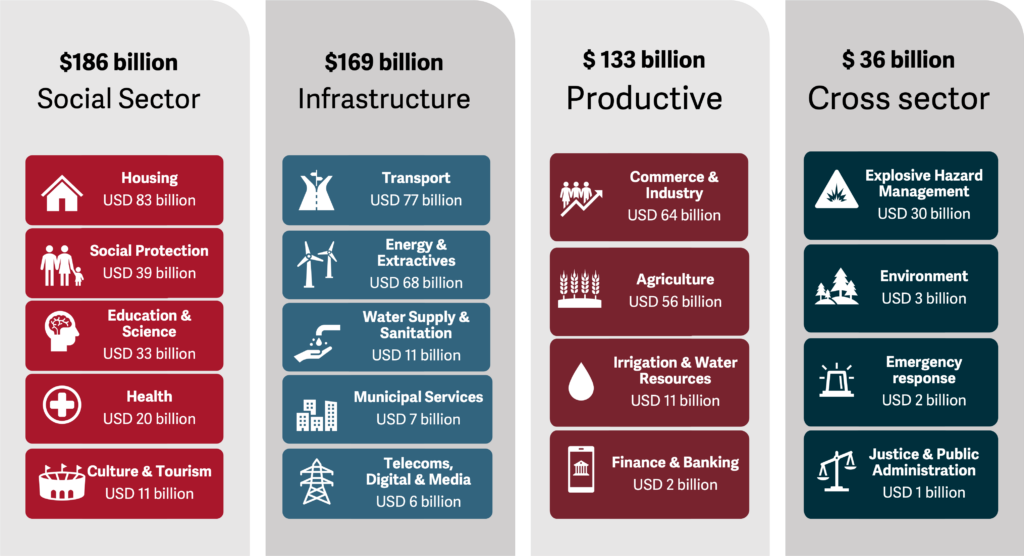
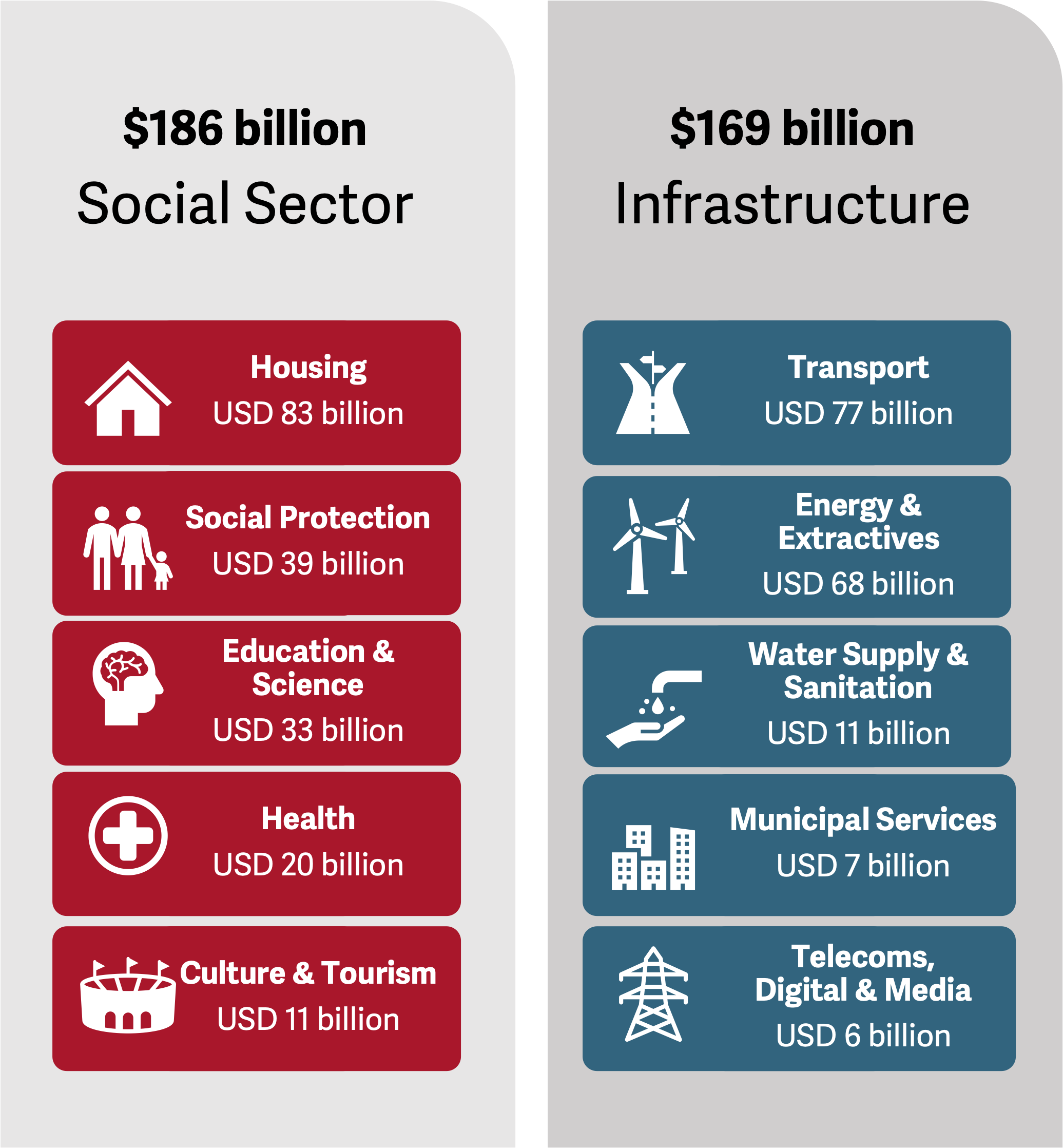
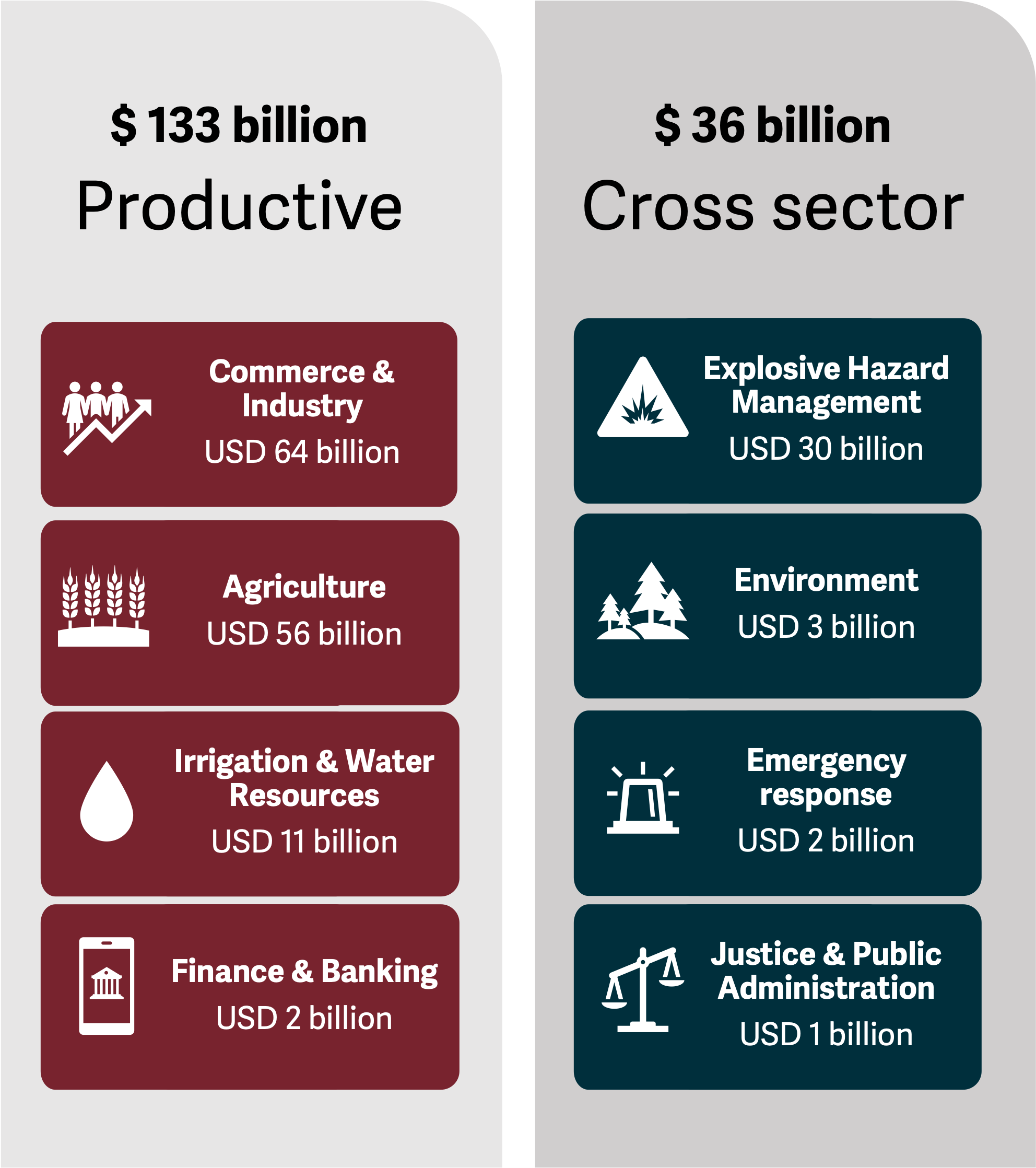
Ukraine Critical Sector Funding Needs
International Aid & Support
As of February 2025, USD 300 billion in international aid has been invested into Ukraine. This figure was up from USD 283 billion as of 31 December 2024. Figures for all countries (except the UK) are current as of 28 February 2025. UK data is updated through 30 April 2025.
Tanner Weil provided an expert report and testimony on behalf of Air Liquide, a multinational supplier of industrial gases and related services, in a construction dispute arbitration surrounding the development and construction of an anaerobic digester biogas facility in Pennsylvania. The unanimous arbitration panel awarded more than $25.4 million, an amount determined directly from Mr. Weil’s analysis and testimony.
With deep expertise in survey research, sampling, and statistical analysis, Dr. Iyengar expands Secretariat’s capabilities in high-stakes intellectual property, class action, and commercial disputes.
During Peru’s 2026 presidential election, Secretariat’s Arnold Y. Castillo was retained by a major political party to conduct an independent assessment of identified anomalies and determine whether the available evidence justified further technical scrutiny.